
Engineering and Technology
Recruiting
Building on my previous work on the classification and isolation of real roots in nonlinear equations, I am now exploring the next stage of the problem: root multiplicity classification. The goal is to investigate new mathematical and computational methods for determining and classifying the multiplicity of isolated roots, beyond conventional derivative-based approaches.
I am looking to collaborate with researchers and students interested in numerical analysis, computational mathematics, nonlinear equations, and scientific computing. If this area aligns with your research interests, I would be happy to connect and discuss potential collaborations.
The main research question is :
Can root multiplicity be classified from the local behavior of a function without relying solely on higher-order derivatives?
Open Level · NSRI · 0 roles open
PythonMathematicsAnalysisProblem Solving
Engineering and Technology4/4 members
Applications Closed: Group Full

Engineering and Technology
Recruiting
AGILE Lab is an advanced interdisciplinary research group focused on developing adaptive geometric intelligence for autonomous embodied systems. The team investigates how geometry, morphology, and decentralized communication can enable scalable collective intelligence in robotic systems. By integrating swarm robotics, computational geometry, artificial intelligence, bio-inspired engineering, and simulation-based modeling, AGILE Lab develops novel algorithms and robotic architectures that allow autonomous agents to perceive, reason, adapt, and collaborate in complex environments. Current research focuses on geometry-induced collective inference, multi-agent coordination, autonomous reconstruction, and efficient robotic systems inspired by biological collective behaviors.
advanced · NSRI · 20 roles open
Artificial IntelligenceMachine LearningDeep LearningReinforcement Learning
Engineering and Technology0/20 members

Health and Life Sciences
Recruiting
ONRI is a multidisciplinary student-led research community dedicated to fostering high-quality scientific research and collaboration across health sciences, biotechnology, artificial intelligence, and interdisciplinary fields.
Members will have the opportunity to contribute to a diverse range of research projects, including:
• Clinical Research
• Systematic Reviews & Meta-analyses
• Artificial Intelligence in Healthcare
• Bioinformatics & Computational Biology
• Genetics & Molecular Biology
• Public Health Research
• Medical Education Research
• Data Science & Machine Learning
Depending on project requirements, members may work on literature review, protocol development, data collection, data cleaning, statistical analysis, manuscript writing, figure preparation, and publication support.
We welcome students from all academic backgrounds and experience levels. Training and mentorship will be provided based on the needs of each project.
What we look for
• Curiosity and willingness to learn
• Consistency and professionalism
• Teamwork and communication
• Commitment to research ethics
Members demonstrating consistent performance may be invited to lead future projects and mentor new researchers within ONRI.
Open Level · NSRI · 9961 roles open
Literature ReviewScientific WritingData CollectionData Cleaning
Health and Life Sciences39/10000 members

Computer Science, AI, and Data Science
Recruiting
Prima Domini is the principal research patronage group of CuteHeart Exosystems Ltd., dedicated to advancing deterministic execution theory, ecological computing, simulation topology, and secure protocol design. The group focuses on reducing the ecological impact of modern technology, improving safety and efficiency in aging and simulation‑based systems, and addressing extreme environmental computing conditions to enhance security and reliability.
Research within Prima Domini is conducted on the CuteHeart platform using an online IDE that supports Python, Lua, and visual scripting. Contributors participate in weekly research cycles and work within deterministic and semi‑deterministic execution environments to evaluate system behavior, protocol correctness, ecological telemetry, and execution‑path stability. The group welcomes students and early‑career researchers, offering a structured environment for those interested in systems research, execution theory, and protocol design.
Prima Domini maintains several core exploration tracks. These include deterministic execution, latent execution mapping, signal‑process trajectory recovery, electromagnetic hardening for computational workloads, stochastic and systolic execution modeling, protocolization and atomic execution, and manifold topology with tessellation for simulation spaces. Each track is designed to help researchers understand how execution pathways, system topology, and protocol structure influence output, safety, and ecological impact.
The group operates as a federated research collective. Work progresses through a structured cycle consisting of preliminary analysis, interlocutory mid‑stage analysis, and thesis‑oriented pre‑ and post‑analysis. This methodology encourages iterative refinement, reproducibility, and clarity as execution models evolve over time.
Open Level · CuteHeart Exosystems & NSRI · 2 roles open
automataprojection mappingproblem modelingprotocolization
Computer Science, AI, and Data Science6/8 members

Biomedical Engineering
Recruiting
> This study investigates whether the Replay-Gated Cascade Consolidation (RGCC) mechanism extends beyond spiking neural networks to transformer-based language models. We test the hypothesis that sequential learning in transformers exhibits the same replay-driven consolidation dynamics predicted by RGCC, including competition for shared parameters and an encoding-order consolidation gradient. By analyzing sequential fine-tuning and replay strategies, we evaluate whether RGCC provides a unified mechanistic explanation for memory consolidation and catastrophic forgetting across fundamentally different neural architectures.
advanced · NSRI · 4 roles open
Master's or PhD in domain Neurosciencecomputational neurosciencebiomedical engineeringlife sciences
Biomedical Engineering1/5 members

Health and Life Sciences
Recruiting
Explore this NSRI research group and review the full project details before applying.
Open Level · NSRI · 0 roles open
Health and Life Sciences53/50 members
Applications Closed: Group Full

Health and Life Sciences
Recruiting
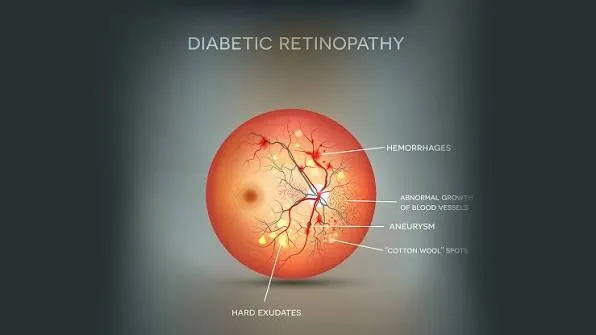
We're building a small research team to study how deep learning can help detect and grade diabetic retinopathy from eye images. The goal is to compare a few existing model architectures, understand what makes them work (or fail), and write this up for publication in the NSRI journal. No prior machine learning experience needed — we'll learn the basics together as a team. Looking for 2 MBBS students (clinical insight, literature review, write-up) and 2 tech students (data work, model training) who are curious and willing to commit weekly.
Open Level · NSRI · 4 roles open
Basic PythonInterest in medical imagingMBBS background (for 2 seats)No prior ML experience required
Health and Life Sciences0/4 members

Computational Biology
Recruiting
This project explores how replayed memories are consolidated into long-term knowledge in biologically inspired spiking neural networks. We will develop a hippocampus–neocortex model to investigate systems consolidation, schema formation, and memory transfer using computational neuroscience methods.
Open Level · NSRI · 3 roles open
Computational NeuroscienceSpiking Neural NetworksPythonMachine Learning
Computational Biology17/20 members

Health and Life Sciences
Recruiting
Explore this NSRI research group and review the full project details before applying.
Open Level · NSRI · 0 roles open
Health and Life Sciences55/50 members
Applications Closed: Group Full

Health and Life Sciences
Recruiting
Explore this NSRI research group and review the full project details before applying.
Open Level · NSRI · 8 roles open
Health and Life Sciences42/50 members

Computer Science, AI, and Data Science
Recruiting
Apply here: https://www.yriscience.com/?ref=nsri
The YRI Fellowship is a paid research program for high school students who want to build serious research experience, especially students aiming for ISEF, IEEE, science fairs, selective journals, and competitive research opportunities.
Although this is a paid program, NSRI is supporting and listing YRI because it is one of the few external programs we have seen produce strong student outcomes. YRI has shown especially strong results for ambitious high school researchers who want structured mentorship, clear deadlines, and publication or competition oriented research support.
Students in the program are matched with PhD level mentors and guided through the process of developing an original research project, writing a paper, and preparing for publication or competition submission.
This opportunity is best for high school students who are serious about research and want a more intensive, guided program.
Important note:
YRI is currently the only paid research program officially backed by NSRI. Most NSRI research opportunities remain free, student led, and open access.
Open Level · YRI · 99999948 roles open
Computer Science, AI, and Data Science52/100000000 members

Health and Life Sciences
Recruiting
We are conducting a systematic review examining the effects of creatine supplementation in adolescent and youth populations. Despite creatine being one of the most widely used dietary supplements among young people, the evidence base for this age group remains undercharacterized relative to adult literature. This review aims to fill that gap by comprehensively synthesizing available data across multiple outcome domains.
We are recruiting motivated individuals to join the review team. Roles may include title/abstract screening, full-text review, data extraction, risk of bias assessment, and manuscript writing. Prior experience with systematic reviews and coding is helpful
Advanced · NSRI · 0 roles open
Health and Life Sciences8/7 members
Applications Closed: Group Full

Health and Life Sciences
Recruiting
A student research group conducting a narrative review on the therapeutic potential of iPSC-derived cardiomyocytes in heart failure. Our goal is to synthesize current scientific literature, evaluate existing approaches, and identify future directions in stem cell-based cardiac therapy.
Beginner Friendly · NSRI · 10 roles open
Literature ReviewScientific writingCritical reading; Literature SearcherScientific Writer
Health and Life Sciences0/10 members

Computer Science, AI, and Data Science
Recruiting
The STEMSprouts × NSRI Research Groups give STEMSprouts community members direct access to NSRI's structured research mentorship and publication pathway. STEMSprouts brings an active student community passionate about STEM education and outreach. NSRI brings the research infrastructure — lead researchers, group coordination, peer review, and NSRI Journal publication. Participants are placed into co-branded research groups focused on STEM-relevant topics, work under experienced mentors, and produce original peer-reviewed work. Free for every student.
Open Level · NSRI · 9869 roles open
Computer Science, AI, and Data Science131/10000 members

Engineering and Technology
Recruiting
The Minorities in STEM × NSRI Research Cohorts connect students from underrepresented backgrounds with NSRI's global mentor network for structured, publication-focused research. Minorities in STEM supplies the community — students passionate about breaking into STEM fields who need real research experience and credentials. NSRI supplies the infrastructure — lead researchers, research group platforms, peer review pipelines, and publication through NSRI Journal. Groups of 5–10 researchers work under university-level mentors toward a completed, publishable paper. Over 300 students have applied to join. Free for every participant.
Open Level · NSRI · 999905 roles open
Engineering and Technology95/1000000 members

Health and Life Sciences
Recruiting
A multidisciplinary research group focused on advanced biomaterials, nanotechnology, medicinal chemistry, and healthcare innovations for wound healing, antimicrobial therapies, drug delivery, and sustainable healthcare solutions.
Open Level · NSRI · 7 roles open
Health and Life Sciences0/7 members

Public Health
Recruiting
Explore this NSRI research group and review the full project details before applying.
beginner · NSRI · 10 roles open
PythonData analysis
Public Health0/10 members

Health and Life Sciences
In Progress
We are conducting a systematic review of the clinical evidence database underpinning the NCCN Guidelines for Breast Cancer Version 4.2026, with the primary objective of mapping critical evidence gaps.
Objective: To identify the "Resource-Evidence Gap" by analyzing whether the guideline's preferred standards are globally representative to even lower to middle income states or just limited to high income settings with advanced medical infrastructure.
Only those who are genuinely interested in dedicating their time should apply. Participants will have to analyze cited studies, identify representation gaps, evaluate demographic reporting, compare guideline evidence bases, investigate research questions regarding bias in medical evidence, and handle manuscript drafting and revisions. The goal is to get this published, so each participant must commit to staying on board through the entire process, not just the initial drafting, but also the revision stages up until final publication. Our goal is to publish within 3-4 months. None of us are experts yet, so we will learn and navigate this together.
But the only acceptable behaviors are mutual respect and ethical practice.
Intermediate · NSRI · 0 roles open
Data extractionData analysisSystematic review methodologyManuscript Writing
Health and Life Sciences4/4 members
Applications Closed: Group Full

Health and Life Sciences
In Progress
Brain cancer, including primary tumors such as gliomas and glioblastomas, is one of the most complex and life-threatening neurological conditions. Diagnosis and treatment are difficult due to the brain’s sensitive structure, tumor heterogeneity, and limitations in early detection.
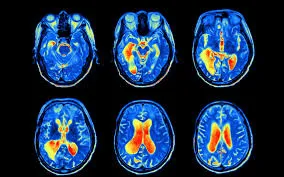
Artificial Intelligence (AI) is increasingly being integrated into brain cancer research and clinical workflows to improve detection, classification, and treatment planning. In medical imaging, particularly MRI scans, machine learning and deep learning models can assist in identifying tumors at earlier stages, segmenting tumor boundaries more accurately, and distinguishing between different tumor types. This improves diagnostic precision and reduces the burden on radiologists.
AI also plays a role in predicting patient outcomes, survival rates, and treatment responses by analyzing large-scale clinical and genomic datasets. This enables more personalized treatment strategies, supporting the shift toward precision medicine in neuro-oncology.
However, challenges remain, including limited high-quality annotated brain imaging datasets, variability in imaging protocols across hospitals, and concerns about model interpretability and clinical trust. Integration into real-world healthcare systems also requires strong validation and regulatory approval.
Future developments are expected to focus on explainable AI models, multi-modal data integration (MRI, genomic, and clinical data), and real-time clinical decision support systems. Ultimately, AI has the potential to significantly enhance early detection, treatment planning, and patient outcomes in brain cancer care.
Beginner Friendly · NSRI · 2 roles open
Python-literature reviw-Data analysis
Health and Life Sciences23/25 members

Computer Science, AI, and Data Science
In Progress
An official NSRI research team auditing algorithmic bias, geographic disparities, and fairness gaps in multi-modal clinical machine learning models trained on large-scale electronic health records.
Target Dataset Focus: MIMIC-IV and eICU Collaborative Research Databases
Clinical machine learning models are rapidly shifting from retrospective research to active bedside software.
However, if these models are trained on data reflecting systemic inequalities, they risk automating and magnifying biases against historically underrepresented demographic and geographic groups.
This research group will conduct a systematic meta-analysis auditing multi-modal clinical AI models (predictive health informatics, critical care survival curves, and diagnostic imaging models). Our primary objective is to map "fairness gaps" - tracking how validation metrics like AUROC, sensitivity, and false-positive rates fluctuate when applied across diverse racial, socioeconomic, and global cohorts.
Students in this group will gain direct exposure to medical data science challenges and solutions, learn how to evaluate algorithmic equity, and contribute to a peer-reviewed manuscript aimed at open-access health informatics journals.
We are looking for dedicated students split into two primary tracks:
- Data & ML Track: Comfortable with Python, data preprocessing, and understanding statistical machine learning metrics.
- Public Health Track: Strong passion for public health and experience in literature synthesis and scientific manuscript drafting.
beginner · NSRI · 0 roles open
Python programmingMachine Learning basicsData analysis
Computer Science, AI, and Data Science62/62 members
Applications Closed: Group Full

Engineering and Technology
In Progress
This research investigates the influence of geometric, magnetic, and operating parameters on electromagnetic damping force in vibration damping systems. A structured dataset will be constructed from published experimental studies, and machine learning-based surrogate models will be developed to predict damping force and evaluate parameter importance. Feature importance techniques will be used to identify the most influential design variables, enabling improved interpretability and faster design insights for electromagnetic damping systems.
Intermediate · NSRI · 3 roles open
PythonLiterature ReviewScientific WritingMachine Learning
Engineering and Technology5/8 members

Health and Life Sciences
Completed
Research Bias in the World is a free NSRI research program examining how bias appears inside the evidence behind major medical guidelines.
Medical guidelines shape how diseases are studied, treated, and understood. But 1 question is often missed:
Does the evidence behind those guidelines actually represent the patients those guidelines affect?
NSRI researchers are already working on 3 major guideline-bias projects across hypertension, cancer, and depression. These projects examine which studies are cited, which countries dominate the evidence, how much of the data comes from a small number of massive studies, whether demographic information is properly reported, and which populations are missing.
Through weekly Sunday sessions, participants will work directly with the host and the NSRI community to break down real guideline-bias examples, discuss evidence gaps, compare research approaches, and learn from each other as they build their own projects.
This is not a passive webinar. It is a working research program for students who want to understand how research systems shape what medicine eventually treats as truth.
Participants will learn how to analyze cited studies, identify representation gaps, evaluate demographic reporting, compare guideline evidence bases, and develop research questions around bias in medical evidence.
Only the first 100 students will be able to join the weekly live sessions. Selected participants will receive the session link and project details after signing up.
Research should not only be trusted. It should be tested.
Weekly sessions will be held every Sunday at 8:00 AM PKT Pakistan, 12:00 PM KST Korea. Equivalent times: 8:30 AM IST India, 9:00 AM Bangladesh time, 11:00 AM Philippines/Singapore time, and 11:00 PM ET Saturday for the U.S. East Coast during EDT, or 10:00 PM ET Saturday during EST.
Open Level · NSRI · 65 roles open
PassionPassion!Passion!!
Health and Life Sciences35/100 members

Health and Life Sciences
Completed
Alzheimer's disease (AD) is the leading cause of dementia worldwide and represents a major unmet clinical challenge. Emerging evidence suggests that ferroptosis, an iron-dependent form of regulated cell death characterized by lipid peroxidation and oxidative stress, plays a pivotal role in the pathogenesis of AD by linking iron dyshomeostasis, mitochondrial dysfunction, neuroinflammation, and amyloid-β and tau pathology. Despite the rapid growth of research in this area, the global knowledge structure, evolving research priorities, and molecular mechanisms underlying ferroptosis in AD remain fragmented and insufficiently integrated.
This project aims to combine bibliometric and scientometric approaches with bioinformatic analyses to comprehensively map the research landscape and identify emerging molecular targets in ferroptosis-related Alzheimer's disease research from 2012 to 2026. Bibliographic data retrieved from PubMed, Scopus, and Web of Science will be analyzed using VOSviewer, CiteSpace, and Bibliometrix to evaluate publication trends, collaborative networks, co-citation patterns, and thematic evolution. To complement these analyses, ferroptosis-associated gene sets from FerrDb will be integrated with publicly available transcriptomic datasets from GEO and AMP-AD to identify differentially expressed genes, enriched biological pathways, protein-protein interaction networks, and cell type-specific ferroptosis signatures. By synthesizing quantitative research trends with molecular evidence, this study seeks to uncover knowledge gaps, prioritize candidate biomarkers and therapeutic targets, and provide actionable insights for future translational and precision medicine approaches in Alzheimer's disease.
intermediate · NSRI · 0 roles open
Literature ReviewBibliometric AnalysisScientometric AnalysisAlzheimer's Disease Research
Health and Life Sciences9/9 members

Social Sciences, Humanities, and Policy
Completed
For this research project the focus will be on “How tax policy differences create unfair competition in online marketplaces?”
PLEASE ONLY APPLY TO THIS IF YOUR STUDIES OR DEGREE ARE IN THE SOCIAL SCIENCES/BUSINESS DOMAIN!
beginner · NSRI · 0 roles open
Literature ReviewData Analysis.
Social Sciences, Humanities, and Policy7/7 members